

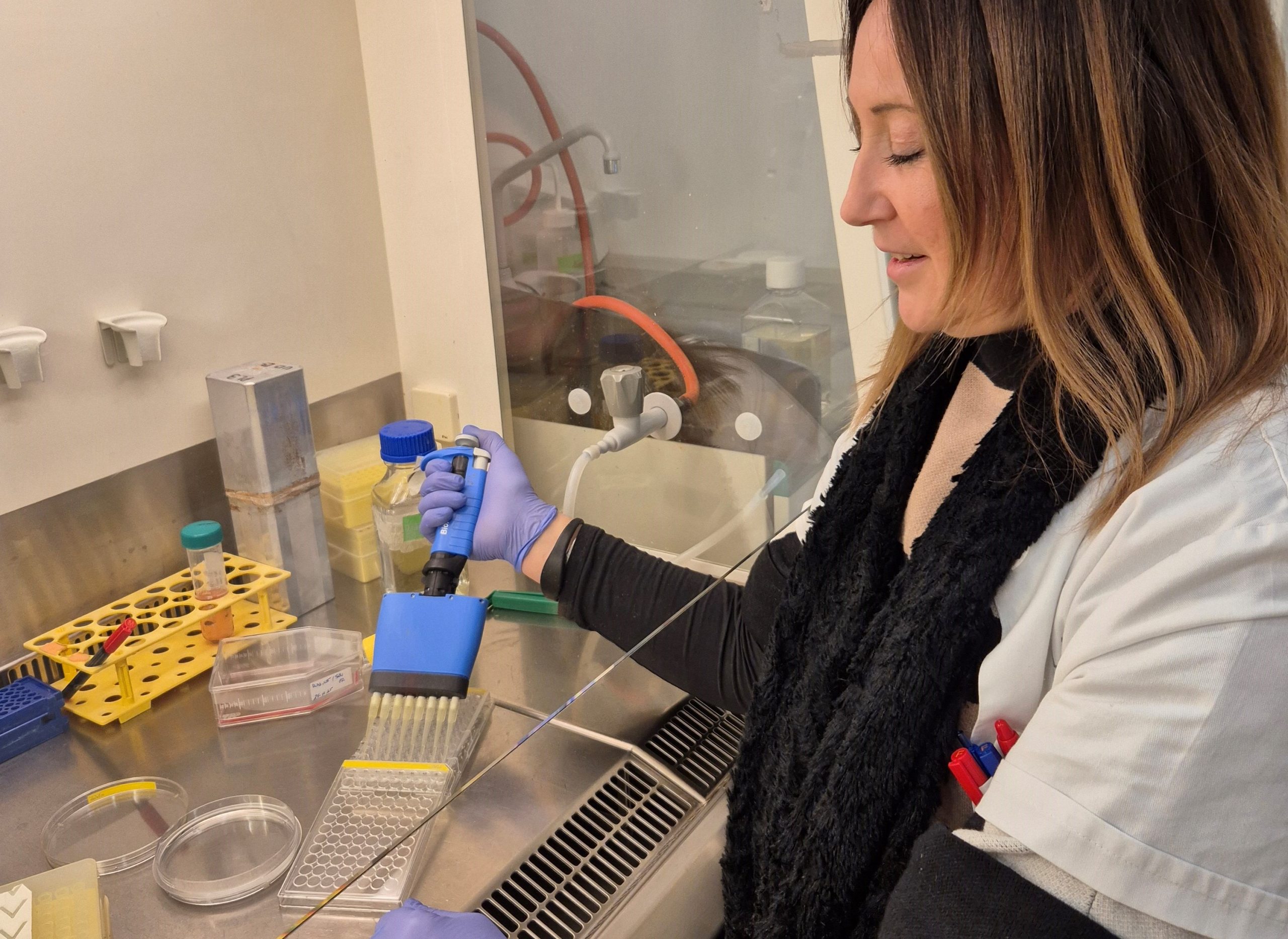
UB researchers develop a drug with potential to treat cancers with KRAS mutations, which are among the most aggressive and treatment-resistant
KRAS is an oncogene that drives some of the most aggressive cancers. It encodes the KRAS protein, which is found mutated and hyperactive in 90% of pancreatic cancers, 50% of colon cancers and 30% of lung cancers, and is considered a very difficult target for pharmacological intervention.
An interdisciplinary team from the University of Barcelona (UB), coordinated by Dr Neus Agell, Professor at the Department of Biomedicine of the Faculty of Medicine and Health Sciences, has developed a molecule with the potential to block KRAS, which has shown highly promising results in animal models of colorectal cancer. The team also includes the groups led by Dr Jaime Rubio and Dr Maria Dolors Pujol, from the Faculties of Chemistry and Pharmacy and Food Sciences, respectively.
The drug is a small molecule that induces cell death through a completely novel mechanism. By blocking the interaction between KRAS and proteins that inhibit its activity, it triggers hyperactivation in tumour cells, a state incompatible with their survival, thereby inhibiting tumour progression.
The drug is the result of years of research by this team, which led them to identify a specific pocket in the structure of the KRAS protein that can be used as a new therapeutic target. Based on this finding, and through in silico screening, the researchers identified several molecules capable of reducing the viability of colorectal cancer cells with KRAS mutations without affecting normal cells.
Tests carried out with the new drug —administered intravenously— in a mouse model of colorectal cancer confirmed its ability to reduce tumour growth without toxicity. Moreover, the compound acts synergistically with the drug Velcade (bortezomib) —currently used to treat multiple myeloma and other haematological cancers— to induce tumour cell death.
New studies on different cancer types
The research team led by Dr Neus Agell is currently focused on determining which groups of patients could benefit most effectively from the new compound. For this purpose, they plan to analyse its effects on other cancer types beyond colorectal cancer, such as pancreatic and lung tumours with mutated KRAS. They will also study its mechanism of action to identify potential synergies with other antitumor drugs.
In parallel, the team will evaluate the compound’s ADME properties —how it is absorbed, distributed, metabolised and eliminated by the body— and its safety, a key step before initiating clinical trials in humans. “The ultimate goal is to advance in the development of these compounds, moving from TRL4 to TRL5–6 —that is, from experimental validation in the laboratory to demonstration of their performance in more advanced preclinical models— in order to increase their value and attractiveness for future pharmaceutical development,” concludes Dr Agell.