

PulSensing Technologies is born: the new University of Barcelona spin-off aiming to improve early cancer diagnosis
The University of Barcelona (UB) has launched PulSensing Technologies, a new spin-off designed to democratize access to positron emission tomography (PET), an essential technology for the early diagnosis of cancer. In 2022, close to 20 million new cancer cases were recorded worldwide, according to the WHO, and early detection remains key to ensuring more effective treatments.
Despite its importance, fewer than 1% of medical centres worldwide currently have a PET scanner, mainly due to the high cost and complexity of the equipment. PulSensing was created precisely to address this global challenge, thanks to a technological innovation developed within the framework of university research: a high-performance ASIC —a microchip specifically designed for radiation detection with great precision and speed— that is compact and scalable, enabling higher-resolution PET images while reducing the size, cost, and technical requirements of scanners.
This improvement can enable faster examinations, lower radiation doses, and more reliable diagnoses, opening the door for centres that currently lack access to PET technology. According to Óscar de la Torre, PulSensing’s CEO, “the company’s goal is to bring to society the technology developed within the university environment. We will focus on improving scanners for cancer detection, making them more precise and affordable worldwide, thanks to radiation-detection electronics that have applications in high-energy physics and, in particular, in medical imaging.”
CTO Daniel Guberman adds that “our technology has a direct application in PET scanners, which are essential for oncological diagnosis. It significantly improves image quality and therefore diagnostic capabilities. To make the leap from research to the real world, this technology must be transformed into a product installable inside a scanner, and creating a company is the most efficient way to achieve that.”
The creation of the spin-off also responds to a growing demand in the sector. As de la Torre explains, “the idea emerged from the interest generated in international projects. Many research centres and small companies needed access to this type of electronics; therefore, the natural step was to set up a company to transfer it to the market.”
The global PET systems market is dominated by large manufacturers, but SMEs are gaining relevance by offering more flexible and affordable solutions. The rise in cancer cases and the need for more accessible medical technologies enhance the potential of solutions like PulSensing’s, especially in low- and middle-income countries where cost remains the main barrier.
Technology with social and scientific impact
PulSensing’s technology represents a major breakthrough with strong social impact: it improves image resolution, reduces equipment costs, and enables earlier diagnoses, ultimately supporting more effective treatments. It also creates new opportunities for SMEs developing their own systems based on this ASIC and broadens the toolkit available for scientific research.
Professor David Gascón, director of the Technology Unit at ICCUB (UB) and professor at the Faculty of Physics, highlights that “this technology is the result of extensive experience in the development of instrumentation for radiation detection and, in particular, high-precision application-specific integrated circuits. Transferring and exploiting this knowledge requires an appropriate framework, and the creation of a spin-off offers us the opportunity to do so efficiently.”
Dr. Eugeni Graugés, Dean of the UB Faculty of Physics, welcomes the creation of the new spin-off and underscores its strategic value for the university: “PulSensing is a model example of how the excellent research carried out in our faculty can be transformed into real societal impact. This project demonstrates our researchers’ ability to generate cutting-edge innovation and to transfer knowledge in areas as sensitive as cancer diagnosis.”
A highly experienced team
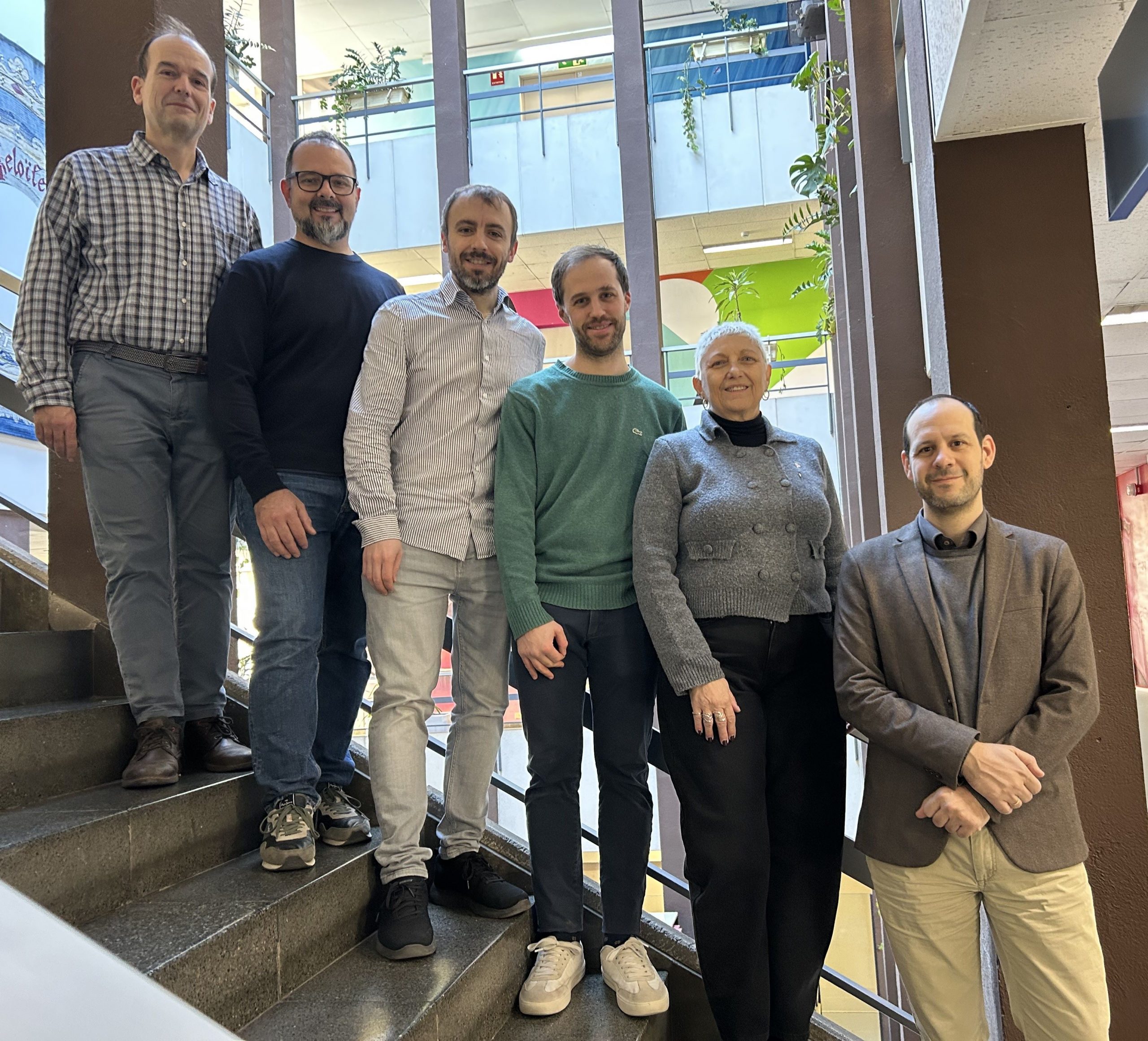
PulSensing is supported by a highly specialized team:
-
Óscar de la Torre, CEO: physicist and MBA, with experience in start-ups and seven years in ASIC quality control.
-
Daniel Guberman, CTO: PhD in Physics, with more than eight years in R&D of PET detectors and five years in technical management.
-
Dr. David Gascón, UB professor and director of the ICCUB Technology Unit, with more than 25 years of experience in ASIC R&D.
The company is completed by Andreu Sanuy, expert in PCB design and ASIC packaging, and Joan Mauricio, ASIC design specialist and software/firmware developer, forming a solid technological base to address the challenges of the sector.